
Ticketing, asset control, change management and defect tracking — the systems your IT department runs on, deployed inside your network. The reason to treat these as one capability rather than four products is that the value appears at the joins: a request linked to an asset, linked to a change, linked to the person who approved it.
The platforms
Each has its own page with screenshots, what it is for, and what an engagement looks like.
GLPI
IT asset management and service desk. Ticketing and a full CMDB in one system, with inventory automation so the asset register maintains itself.
Product page →
ZenTao
Project and quality management. Requirements, delivery and test evidence in one system, for work where you must prove which change satisfied which requirement.
Product page →
ProjeQtOr
Project, portfolio and risk management. Plans, resources, budgets and risk registers in one system, for work steered on schedule and cost.
Product page →

Leantime
Lightweight project management. Goals, boards and milestones in a tool business departments will actually open.
Product page →

MantisBT
Issue and defect tracking. A focused tracker with rigorous workflow control, for teams with traceability obligations.
Product page →
All five are open source. Each project publishes its own documentation, release notes and licence terms — worth reading before you decide, and worth reading independently of us.
Visit the GLPI website
The official site of the GLPI project, published by Teclib’. Opens in a new tab — hold Ctrl (⌘ on a Mac) or middle-click to keep it in the background.
glpi-project.orgVisit the ZenTao website
The official site of the open-source ZenTao repository, published by EasySoft. Opens in a new tab — hold Ctrl (⌘ on a Mac) or middle-click to keep it in the background.
github.com/easysoft/zentaopmsVisit the ProjeQtOr website
The official site of ProjeQtOr, developed in France by ProjeQtOr SAS. Opens in a new tab — hold Ctrl (⌘ on a Mac) or middle-click to keep it in the background.
www.projeqtor.comVisit the Leantime website
The official site of the Leantime open-source project. Opens in a new tab — hold Ctrl (⌘ on a Mac) or middle-click to keep it in the background.
leantime.ioVisit the MantisBT website
The official site of the MantisBT project, maintained by the MantisBT team. Opens in a new tab — hold Ctrl (⌘ on a Mac) or middle-click to keep it in the background.
mantisbt.orgWhich ones you need
These tools overlap, and most organisations do not need all of them. GLPI is the front door for internal IT — tickets attached to a live asset register. The other four are all places work gets tracked, and the difference between them is what you owe somebody: ZenTao where a requirement has to be traceable to a release, ProjeQtOr where a project has to be steered on plan, cost and risk, MantisBT where a defect has to have an auditable lifecycle, Leantime where a department simply needs its projects visible.
Which combination fits depends on what you are obliged to evidence and how your teams actually work. That is the first thing we establish during scoping, and we will tell you if you need fewer than you expected. Choosing between our platforms → sets out the full comparison and how each maps onto PRINCE2 governance.
ITIL, implicitly
GLPI is built along ITIL lines: its incident, request, problem and change records, its service catalogue and its CMDB are the objects the framework describes. We do not sell ITIL as a service, because there is nothing to sell — you inherit the discipline by running a service desk correctly. What we do is configure categories, priorities, approval paths and SLA rules so the shape matches how your organisation actually escalates. The counterpart, for projects rather than services, is PRINCE2 Agile.
In use
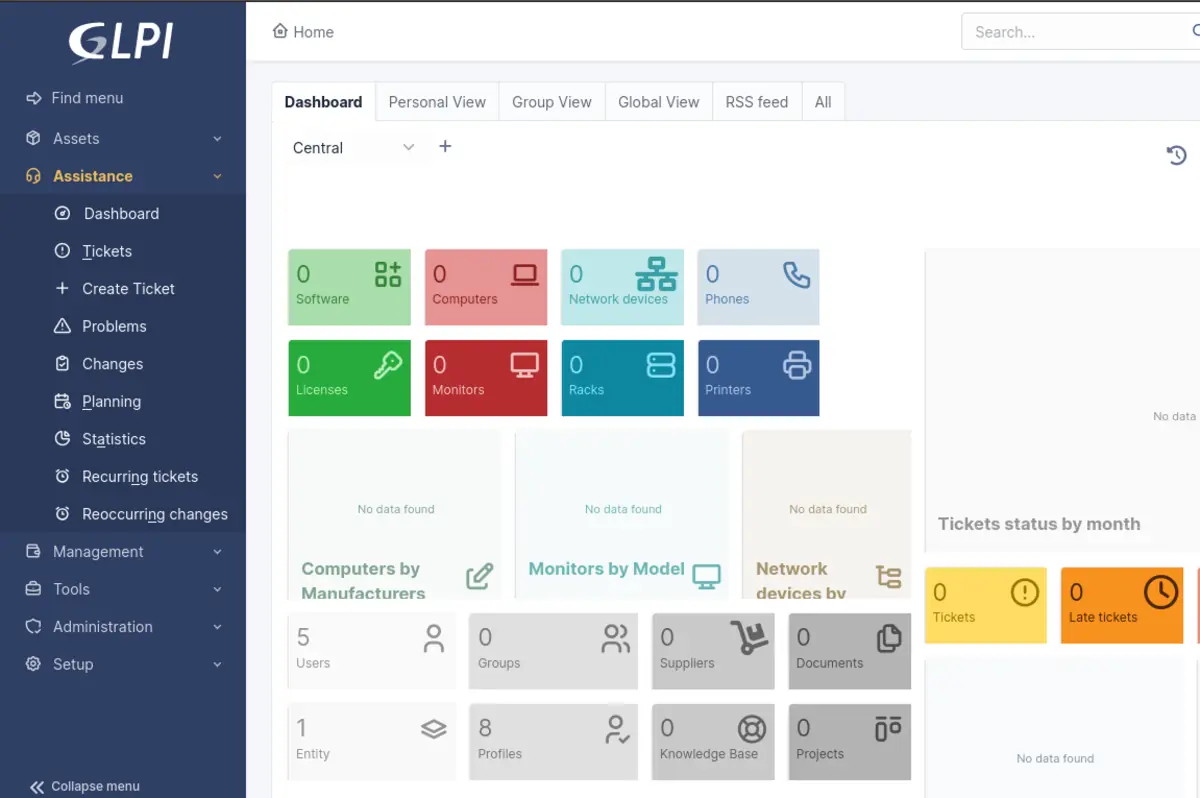
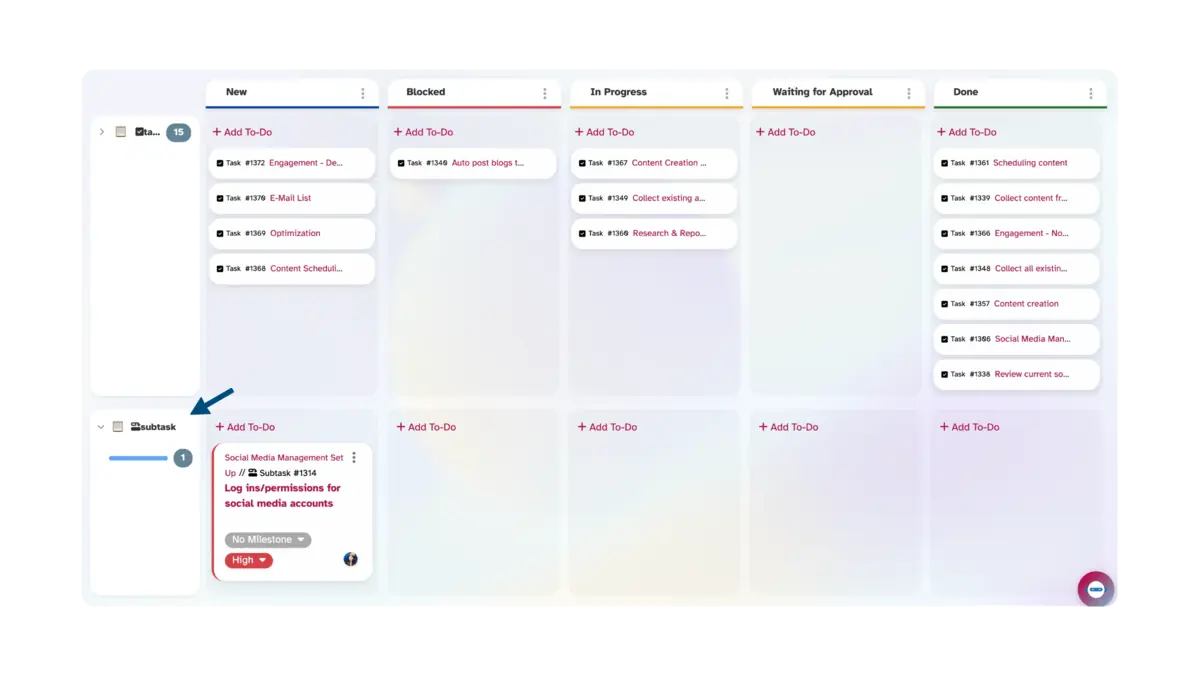
Screenshots from the GLPI and Leantime projects, shown to illustrate the platforms we deploy and configure. All product names and logos are the trademarks of their respective owners.